Fast fashion: France’s new environmental penalty also looks to Italy

Barbara Speranza
Marketing Specialist
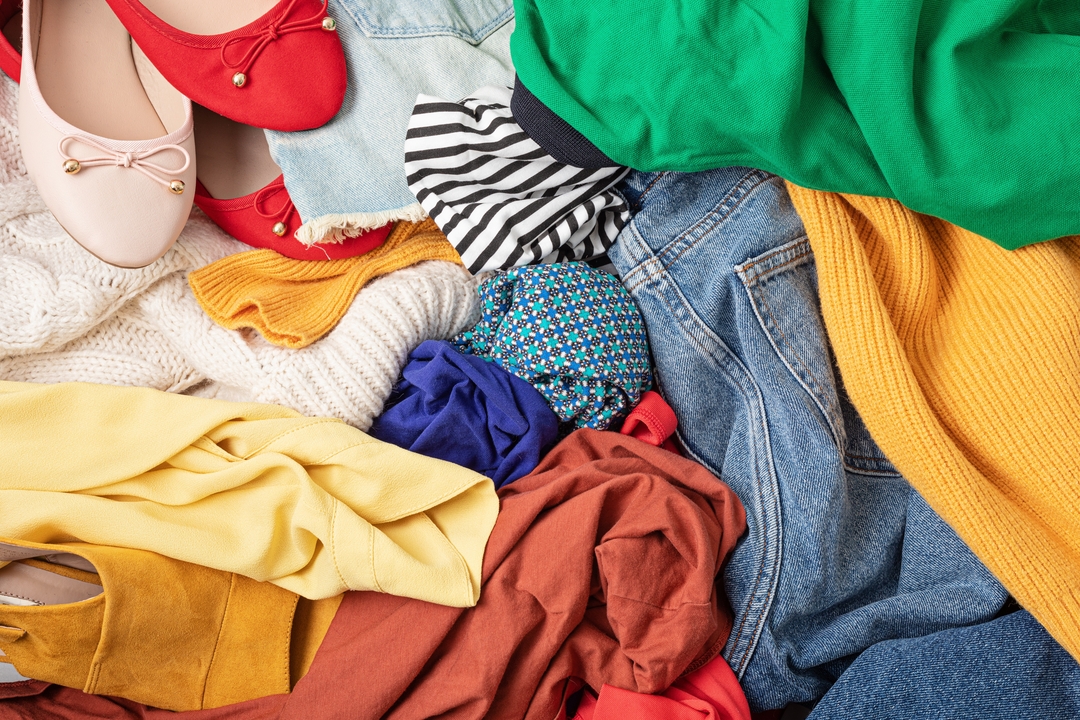
On 1 September 2026, France introduced a new environmental penalty targeting ultra-fast fashion products. The measure aims to address a business model based on high volumes, a wide variety of items, low prices and the rapid replacement of garments. The levy starts at €0.25 for certain products and can reach up to €12 in 2026, subject to a cap of 50% of the product’s price.
Fast fashion: France’s new environmental penalty also looks to Italy
The principle behind the measure is eco-modulation: environmental considerations are directly factored into the cost structure. France’s new measure takes several factors into account, including the number of products available, their price and their repairability. The aim is to make a business model based on an extremely broad product offering and rapid garment turnover more costly.
The new penalty is part of a broader extended producer responsibility (EPR) framework, under which companies placing textile products on the market are required to contribute to end-of-life management, from collection to recycling. In Italy, the EPR principle for textiles involves manufacturers, importers and distributors and aims to fund collection, reuse and recycling.
This development also affects the fashion supply chain, which is increasingly required to integrate sustainability, traceability and product lifecycle management. In the fashion industry, sustainability is not limited to production; it also encompasses logistics, distribution, sourcing and end-of-life management.
ESG and circularity become part of the strategy
The issue is directly linked to ESG. Environmental considerations include raw materials, energy, water, transport and emissions, as well as garment durability, repairability and end-of-life management. From a governance perspective, traceability, product data and supply chain oversight are becoming increasingly important.
In this context, the circular economy takes on a strategic role. Designing more durable products, encouraging repairs, using recycled materials and developing reuse initiatives help preserve the value of resources for longer and reduce waste. According to Confindustria, extended producer responsibility can help drive the transition from a linear model to a circular and sustainable one.
Digital transformation can also provide practical support for this process. Dedicated recommerce and second-hand management solutions, together with tools for traceability and product lifecycle monitoring, enable companies to maintain visibility into product value beyond the first sale. From managing resale flows to maximising the value of products in the second-hand market, technology can help extend product lifespans, support new circular business models and provide useful data for better-informed decisions throughout the supply chain.
An issue that also concerns Italy
France’s new measure is also relevant to Italian companies that export to or operate in France, and forms part of a broader European transition.
The French case represents a concrete precedent for the future development of EPR systems in the textile sector. In Italy, the issue is already at the centre of discussions between institutions and businesses. The stakeholders involved include brands, manufacturers, importers, distributors and e-commerce operators.
Looking ahead, data and artificial intelligence can further support these processes by helping companies analyse market behaviour, monitor product value over time and plan production more consciously. In this way, digital transformation can contribute not only to operational efficiency but also to the development of more circular business models.

FAQ
Refashion is the French organisation responsible for managing the EPR system for textiles, clothing, household linen and footwear. Through eco-contributions, it supports activities related to collection, reuse, repair, recycling and eco-design. Under France’s new system, it will also be involved in administering the penalty targeting ultra-fast fashion.
Extended producer responsibility (EPR) is the principle under which companies placing certain products on the market must contribute to managing those products at the end of their useful life. In the textile sector, this includes activities such as collection, preparation for reuse, recycling and material recovery
Recommerce is the model of buying and selling used, refurbished or second-hand products, whereby an item is returned to the market rather than discarded. In practice, recommerce helps extend product lifecycles by encouraging reuse and reducing waste and the consumption of new resources. It is particularly widespread in electronics, fashion, furniture and other sectors where products can be resold after being used, inspected or refurbished.
Read more articles from the Punto Blog.

Sezione commenti:
Il commento sarà pubblicato dopo essere stato moderato dal nostro staff.